The global real estate and construction industries are currently undergoing a massive transformation, driven by the urgent need for cost-effective, rapidly deployable, and highly durable building solutions. As traditional construction costs continue to skyrocket due to labor shortages and rising material prices, project managers, engineering firms, and homeowners are actively seeking viable alternatives. Enter the era of affordable prefab housing. By leveraging factory-based manufacturing, advanced engineering, and modular design principles, prefabricated buildings are redefining how we think about shelter, workspaces, and large-scale accommodation camps.
Chengdong International Modular Housing Corporation, a pioneering enterprise established in 1998, stands at the forefront of this architectural revolution. With a footprint spanning over 100 countries and a track record of thousands of successful projects, Chengdong has perfected the art of delivering high-quality, affordable prefab housing to the most remote and demanding locations on Earth. This comprehensive guide explores every facet of affordable prefab housing, detailing its unparalleled benefits, diverse product offerings, cost-saving mechanics, and real-world applications in 2026 and beyond.
The Evolution and Definition of Affordable Prefab Housing
To fully appreciate the value of affordable prefab housing, one must first understand what prefabrication entails in the modern construction landscape. Prefabricated housing involves designing and manufacturing the primary components of a building—such as the walls, roof panels, floor systems, and structural frames—in a highly controlled, climate-regulated factory environment. Once these modules or panels are precisely engineered and thoroughly inspected for quality, they are flat-packed or shipped fully assembled to the final construction site. Upon arrival, they are hoisted into place and bolted together, drastically reducing the time spent on on-site assembly.
Historically, prefabricated structures were often viewed as temporary or sub-standard alternatives to traditional brick-and-mortar buildings. However, decades of technological advancements have completely shattered this misconception. Today's affordable prefab housing solutions utilize high-strength, hot-dip galvanized cold-formed steel profiles, advanced thermal insulation materials like rock wool and glass fiber, and sophisticated sealing techniques that prevent water ingress and thermal bridging. As a result, modern prefab homes and commercial modular buildings boast lifespans, structural integrities, and aesthetic qualities that rival or even exceed those of conventional structures.
Through companies like Chengdong Modular House (https://www.cdph.net/), affordable prefab housing has evolved into a highly customizable product. Whether a client requires a single minimalist living space or a sprawling, interconnected engineering camp for thousands of workers, the modular nature of these buildings allows for infinite configurations and easy future expansions.
Unpacking the Financial Benefits: Why It Is Truly Affordable
The primary driving force behind the widespread adoption of modular construction is its remarkable cost efficiency. Affordable prefab housing is not merely "cheap" in terms of raw materials; rather, the affordability stems from a holistic reduction in overall project expenditures.
First and foremost, factory-based mass production enables economies of scale. Because the length, width, and height of products like standard container houses are fixed to standardized dimensions, factories can operate highly automated production lines, significantly driving down the cost of individual structural components. For example, Chengdong boasts a massive super factory in the Lutai Economic Development Zone of Tangshan City, which ensures high-volume output at minimal marginal costs.
Secondly, labor costs—which typically consume a massive portion of any traditional construction budget—are drastically reduced. In a factory setting, specialized workers utilize advanced machinery to assemble parts much faster than a crew could on a muddy, weather-exposed job site. Furthermore, because the structural systems of these prefab units rely on fully bolted connections, there is absolutely no need for complex, time-consuming on-site welding. This empowers project managers to utilize smaller, less specialized local installation crews, thereby keeping labor expenses to an absolute minimum.
Transportation logistics also play a critical role in the affordability equation. To adapt to long-distance ocean freight, affordable prefab housing is ingeniously designed to be flat-packed. The roof, floor, columns, and wall plates of multiple houses can be condensed and packaged into the volume of a single standard shipping container. This space-saving design slashes international shipping costs, making it economically viable to export these high-quality housing solutions to remote regions in Africa, South America, and the Middle East.
Finally, the incredible speed of installation translates directly into financial savings. Time is money in the engineering and construction sectors. Affordable prefab housing slashes project timelines by up to 50%. A prime example of this efficiency is Chengdong's ability to manufacture, deliver, and install a massive, high-standard accommodation camp for 10,000 people at a refinery project in merely 120 days. By enabling faster occupancy, clients can commence their core operations sooner, accelerating their return on investment.
Technical Excellence: Exploring the Product Ecosystem
Affordable prefab housing is not a one-size-fits-all solution. Different environments, project durations, and functional requirements demand specialized architectural designs. The product ecosystem provided by Chengdong encompasses several distinct categories, each engineered to solve specific operational challenges.
Standard and Flat-Pack Container Houses
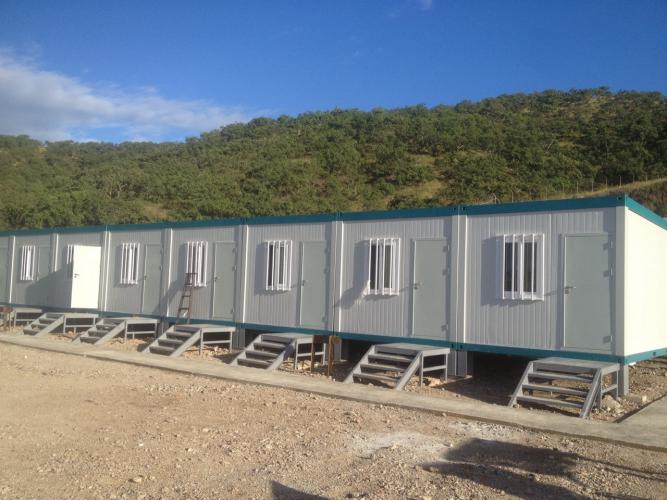
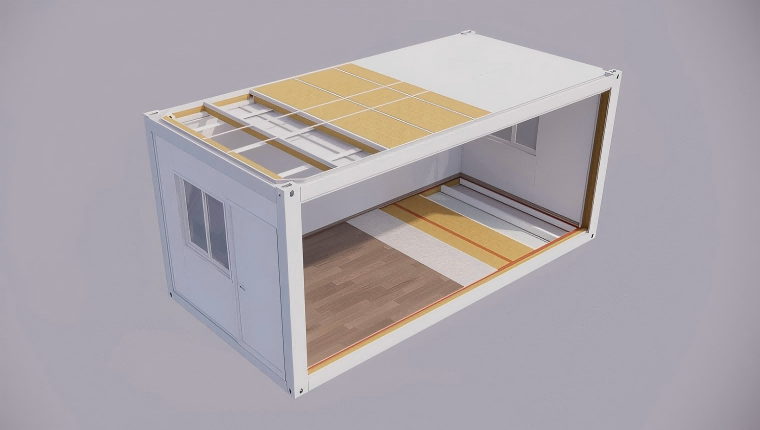
The backbone of the affordable prefab housing industry is the highly versatile container house. These units are based on a standardized box module, allowing them to be used individually or combined horizontally and vertically to create multi-story complexes. A typical standard unit features outer dimensions of 6055mm in length, 2990mm in width, and 2896mm in height.
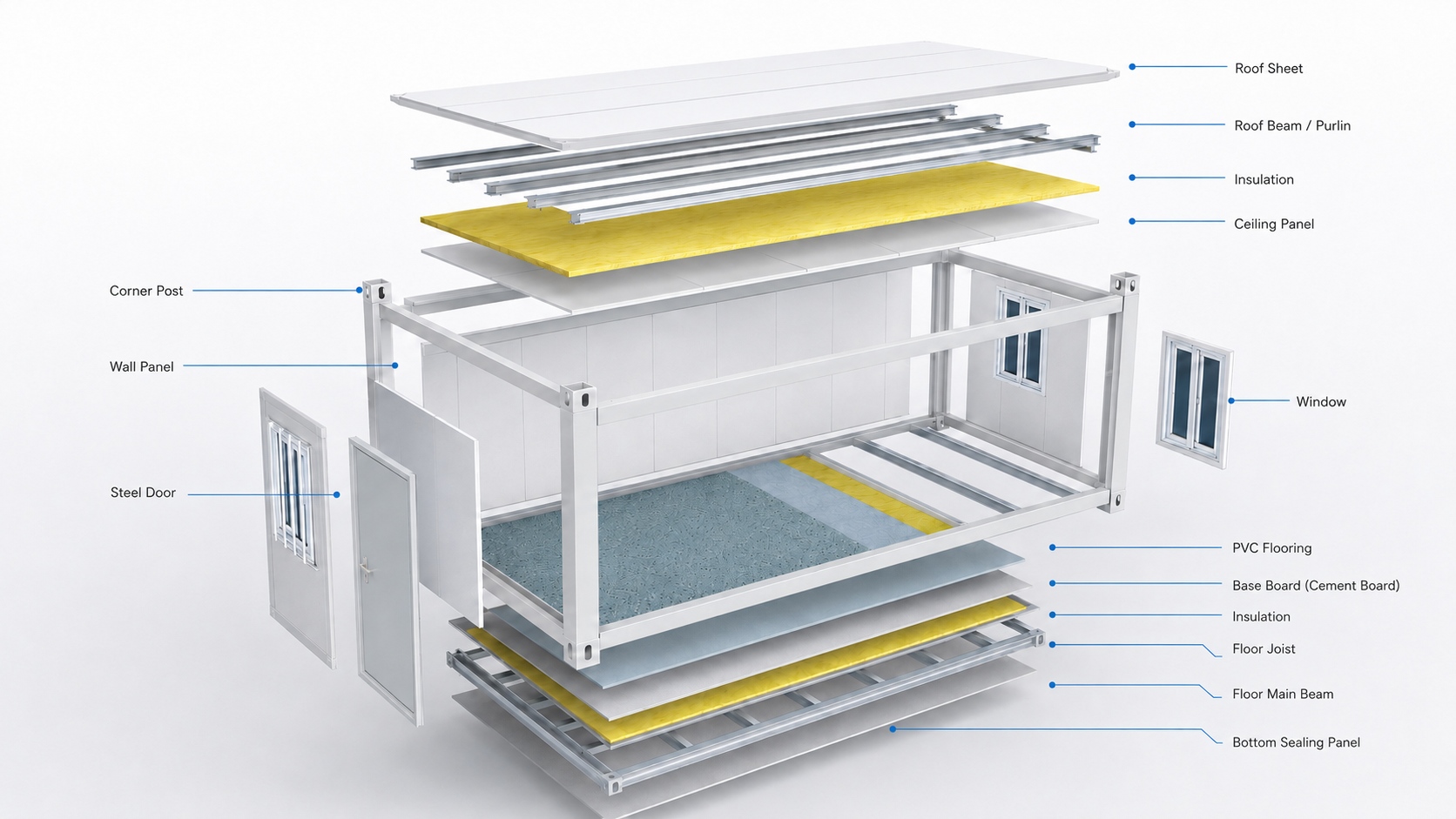
The structural integrity of these units is exceptional. The frames are constructed from hot-dip galvanized profiles that are factory prefabricated to precise tolerances. To ensure occupant comfort in varying climates, the bodies feature robust insulation, typically utilizing 100mm glass fiber wool or rock wool in the roof and floor, alongside 75mm color steel composite boards for the walls. These houses are highly integrated; electrical circuits are prefabricated into the roof, and they come equipped with steel security doors and plastic steel sliding windows. Because they require no secondary decoration on-site, they are ready for immediate move-in upon hoisting.
| Feature | Technical Specification | Benefit for Affordable Prefab Housing |
| Dimensions | 6055mm (L) x 2990mm (W) x 2896mm (H) | Standardized size for mass production and easy transport. |
| Roof Live Load | 0.5 KN/m2 | Ensures structural stability under heavy rain or light snow. |
| Floor Live Load | 2.0 KN/m2 | Supports heavy furniture and high foot traffic in offices/dorms. |
| Wind Load | 0.5 KN/m2 | Withstands significant environmental stresses and strong gusts. |
| Insulation | 100mm glass filament cotton roll felt | Superior thermal efficiency, drastically reducing HVAC energy costs. |
ZA Type Assembled Houses
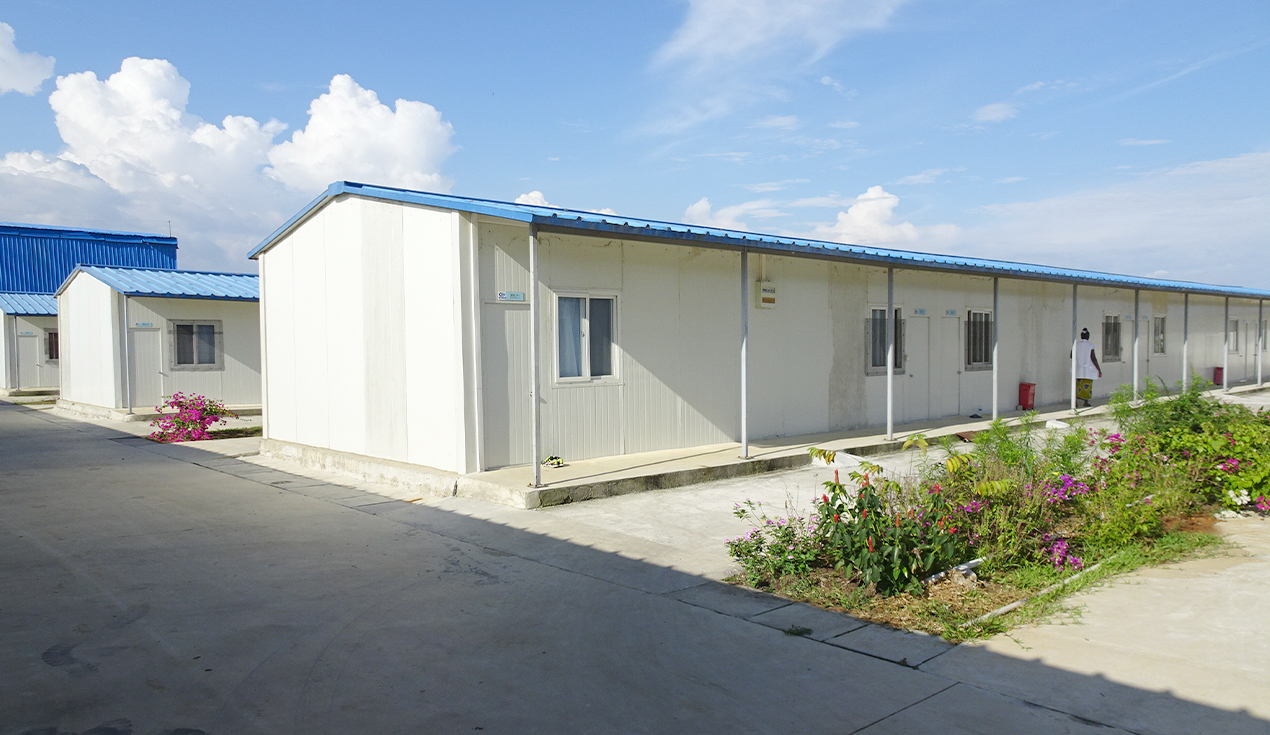
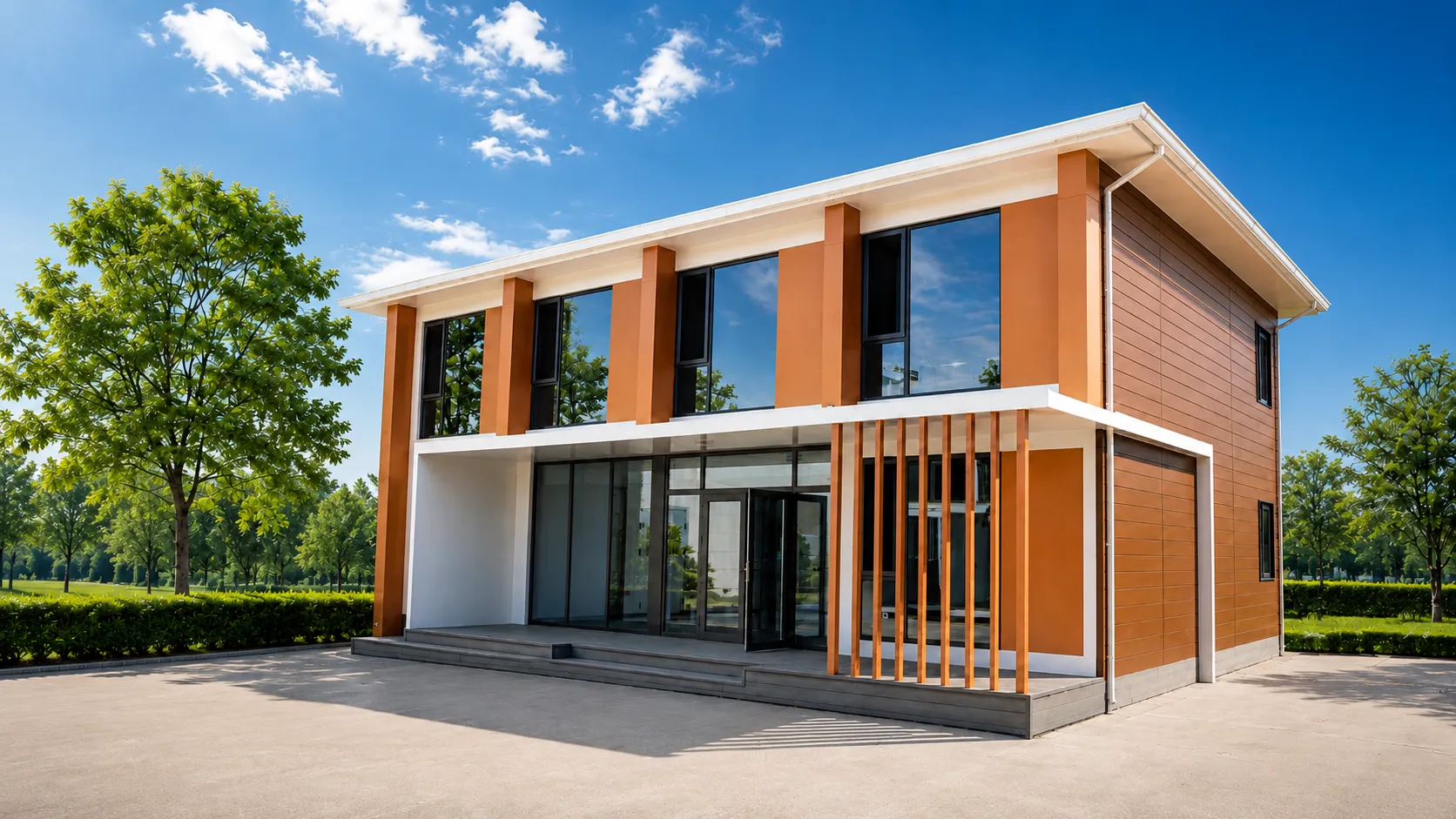
For projects requiring high aesthetics, superior sealing, and immense structural resilience, the ZA type house is an innovative breakthrough independently developed by Chengdong's R&D team. The main structure is cold-formed from hot-dip galvanized steel strip, an innovation that has undergone five major technological iterations.
The ZA type house is celebrated for its structural safety. Standard models can effortlessly withstand category 11 winds, and with special structural treatments, they can be engineered to resist devastating category 17 hurricanes. This makes them the ultimate affordable prefab housing choice for coastal regions and hurricane-prone islands, as evidenced by their successful deployment at a large resort project in Nassau, Bahamas. The structural frame is placed on the inside of the wall top plate, ensuring the external maintenance plates form a seamless, highly sealed connection that locks out moisture and dust.
M Steel Structures
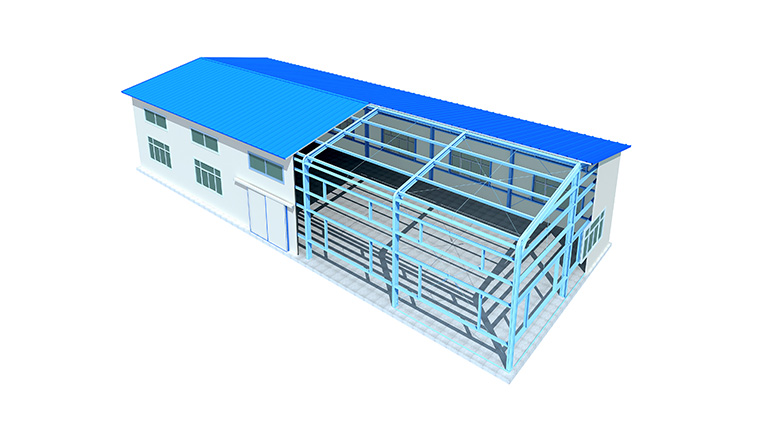
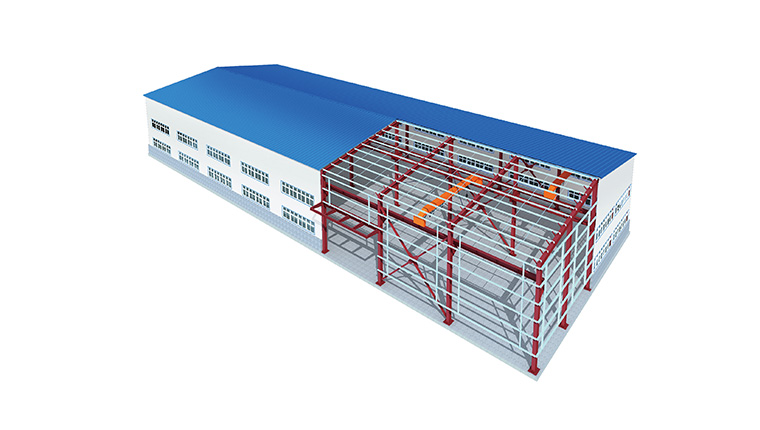
Large overseas engineering camps do not just require dormitories; they also need expansive, open-span functional rooms such as dining halls, warehouses, and recreation centers. To address the high transportation costs and long processing cycles associated with traditional heavy H-beam steel structures, the M steel structure was developed. Utilizing cold-formed materials capable of mechanized mass production, M steel structures provide the necessary wide spans for industrial and communal applications while maintaining the core ethos of affordable prefab housing.
Light Steel Villas
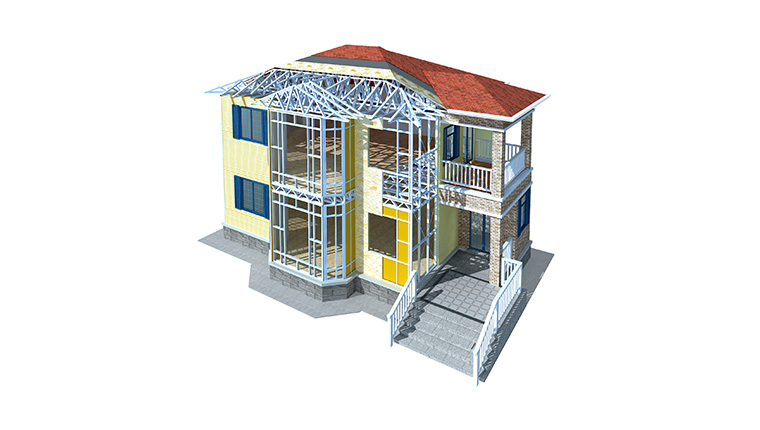
For clients seeking long-term or semi-permanent affordable prefab housing, the light steel villa is the premium choice. These structures represent a fundamental shift in modular architecture, boasting service lives that can exceed 25 years. They are utilized extensively in multi-year engineering projects where the barracks will eventually be handed over to the project owners to serve as permanent operational offices and living quarters. With aesthetic finishes that mimic traditional residential construction, light steel villas provide an unparalleled quality of life for long-term expatriate workers and remote community residents.
Engineering for Extreme Environments
One of the greatest testaments to the engineering prowess behind modern affordable prefab housing is its ability to function flawlessly in the world's most hostile environments. Off-the-shelf housing solutions simply cannot survive the rigorous demands of remote resource extraction sites or high-altitude infrastructure projects.
Cold Regions and Arctic Camps: For regions enduring brutal winters, such as the Khabarovsk region in Russia or the high-altitude infrastructure sites in Central Asia, standard insulation is insufficient. Specialized cold-resistant box houses are designed to withstand temperatures plummeting to -50°C. These ultra-insulated units utilize up to 190mm of high-density insulation, achieving an incredible heat transfer coefficient (U-value) of 0.25 W/mK. They incorporate advanced thermal break technologies and triple-glazed Low-E windows (6+12+6+12+6 configuration) to completely eliminate the cold bridge effect, ensuring interior warmth while minimizing heating energy consumption.
Desert and Gobi Camps: In arid regions like the Sahara or the Middle East, affordable prefab housing must contend with blistering heat and abrasive sandstorms. Products deployed in these zones feature specialized dust-proof sealing technologies and heavy-duty HVAC systems designed to filter out fine particulate matter. The seamless connection of the ZA type house wall panels is particularly effective at keeping sand out of living spaces, ensuring a clean and comfortable environment for workers.
Tropical Rainforest and High-Humidity Camps: In equatorial regions, high humidity and torrential downpours pose a constant threat of corrosion and mold. To combat this, prefab housing relies heavily on hot-dip galvanized steel frames that possess exceptional anti-corrosion properties. Furthermore, instead of using standard mineral wool ceilings, calcium silicate board ceilings are frequently employed in humid environments to prevent moisture absorption and structural degradation.
Real-World Applications and Global Success Stories
The true measure of affordable prefab housing lies in its real-world execution. The versatility of these structures allows them to be deployed across a massive array of industries.
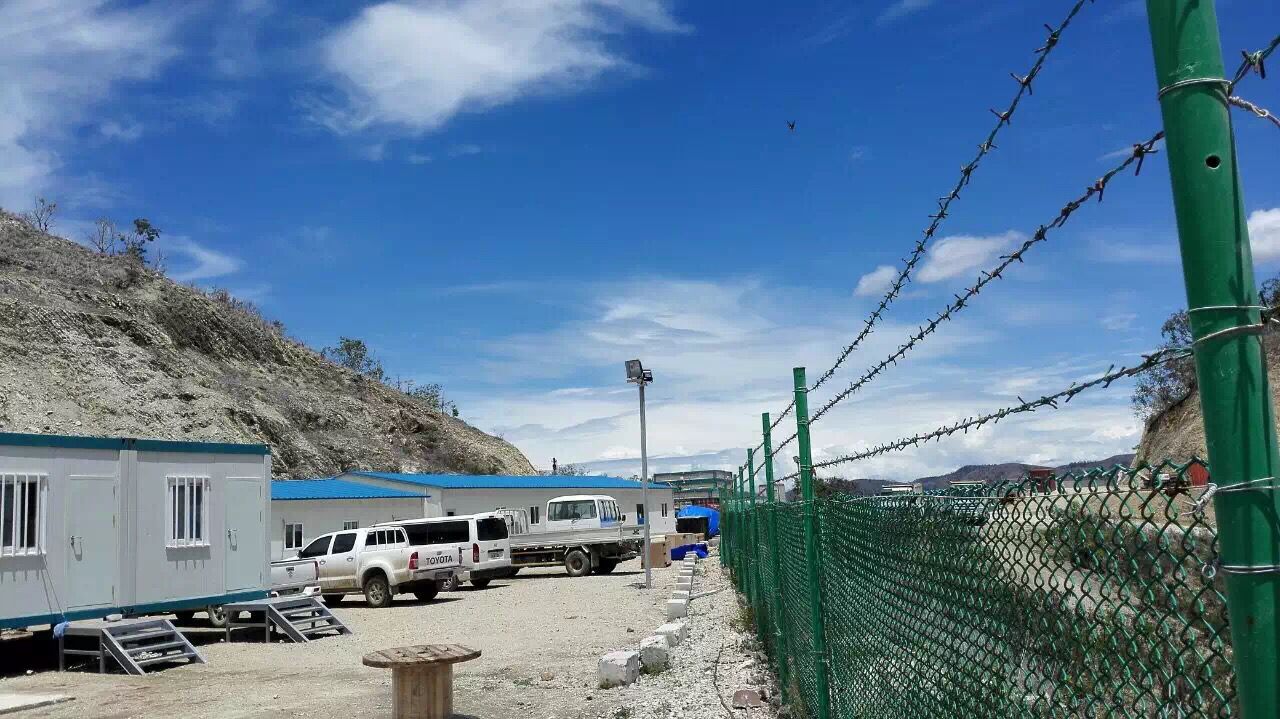
Global Mining and Energy Projects: The resource extraction industry frequently operates in remote, underdeveloped locations that lack local infrastructure. Affordable prefab housing is the lifeline of these operations. In Nigeria, a massive 10,000-person camp was erected for the Zhiliatangote Refinery Phase II project using high-standard modular accommodation. In Zambia, the Kenneth Kaunda International Airport Expansion Project utilized comprehensive camp facilities to house its massive workforce comfortably and securely.
Infrastructure and Transportation: Large-scale rail and highway projects require camps that can be moved as the project advances linearly. Because affordable prefab housing like the standard container house can be lifted and relocated as a whole unit without disassembly, it perfectly matches the progressive nature of infrastructure development. This was successfully demonstrated during the Astana Light Railway Project, where insulated housing solutions protected 3,000 workers from harsh winter conditions, and the Ethiopia Mota Highway project, which featured meticulously designed camp layouts and drainage systems.
Disaster Relief and Emergency Housing: When natural disasters strike, speed is a matter of life and death. The rapid deployment capabilities of affordable prefab housing make it an ideal solution for emergency response. In 2018, the Chinese government provided 1,000 sets of prefab houses to aid displaced populations in Myanmar's Rakhine State, showcasing the humanitarian value of quickly erected, safe shelter.
Commercial and Specialized Facilities: Beyond accommodation, prefab technology is used for specialized functional buildings. This includes temporary military housing, disaster relief hospitals, and even Pharmaceutical Plant GMP camps that must adhere to stringent ISO 14644 cleanroom standards. Furthermore, educational facilities, such as the Antilles Primary School expansion in Curaçao, have utilized improved modular structures to create safe, aesthetically pleasing learning environments rapidly.
The Turn-Key EPC Solution and the 5S360 Service Model
Purchasing affordable prefab housing is only one part of the equation; navigating international logistics, site planning, and installation is equally complex. To alleviate these burdens for global clients, industry leaders provide comprehensive Engineering, Procurement, and Construction (EPC) turn-key solutions.
Chengdong operates on a highly integrated 5S360 service model, ensuring that clients receive a seamless experience from initial concept to global delivery. This one-stop service means that clients sign a single contract with a single team. The process begins with rapid response times; clients can receive a tailored camp design and architectural layout within a mere 48 hours of submitting their project brief.
Once the design is approved, the manufacturing phase utilizes the massive 70,000-square-meter factory capacity to churn out high-quality modules rapidly. The modules are then flat-packed, loaded onto sea freight, and shipped globally. Upon arrival, a dedicated project management team oversees the site installation, ensuring that every bolt is tightened and every electrical circuit is safely connected, ultimately delivering a fully operational, move-in-ready camp. Furthermore, comprehensive operation and maintenance manuals are provided, ensuring the affordable prefab housing retains its structural integrity and comfort over its multi-year lifespan.
Quality Assurance, Certifications, and ESG Compliance
As the world places a greater emphasis on Environmental, Social, and Governance (ESG) standards, affordable prefab housing is perfectly positioned to lead the green construction movement. The factory-based manufacturing process generates significantly less material waste compared to traditional on-site construction, and the high-yield steel frames are entirely recyclable at the end of their lifecycle.
Furthermore, to guarantee absolute safety and regulatory compliance, top-tier affordable prefab housing products undergo rigorous third-party testing. For instance, Chengdong's modular houses, including their prefab containers and expandable houses, hold comprehensive Verification of Conformity certificates adhering to strict European CPR EU 305/2011 and EN 1090-1:2009+A1:2011 standards. This CE certification ensures that the products meet the highest international benchmarks for structural safety, fire resistance, and environmental protection, giving buyers absolute peace of mind.
Conclusion
The construction landscape of 2026 and beyond will be defined by efficiency, sustainability, and economic prudence. Affordable prefab housing is no longer just a temporary fix for remote job sites; it is a permanent, high-quality, and highly engineered solution to the global demand for rapid infrastructure development and residential expansion. By drastically cutting labor costs, optimizing international logistics through flat-pack designs, and providing unparalleled resistance to extreme environmental conditions, modular structures offer an unbeatable value proposition.
Whether you are an EPC contractor looking to house 10,000 workers in a desert oil field, or a developer seeking semi-permanent light steel villas, the modular revolution has a custom-tailored answer. Backed by decades of innovation, CE certifications, and an integrated turn-key service model, companies like Chengdong are building a faster, smarter, and more affordable future.
To explore customized affordable prefab housing solutions, view detailed product specifications, or book a virtual showroom tour, visit https://www.cdph.net/ today and transform the way you build.




 More
More












![Top Advantages of Modular Construction Explained [2025]](/uploads/upload/images/20250424/0fb390068474145a09a8c0504c73b1d2.png)
 May 09, 2025