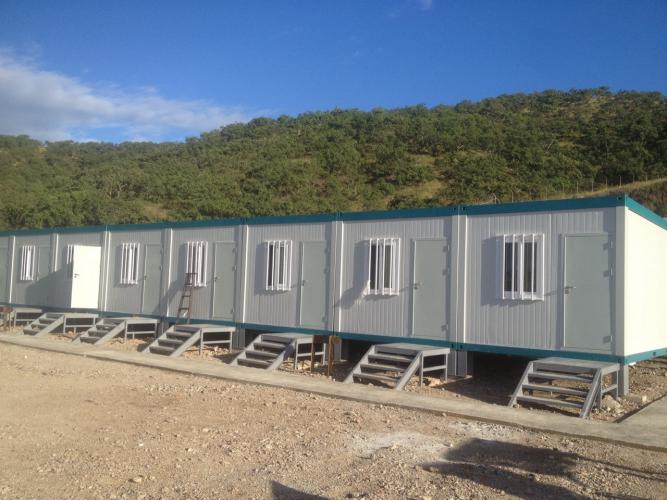
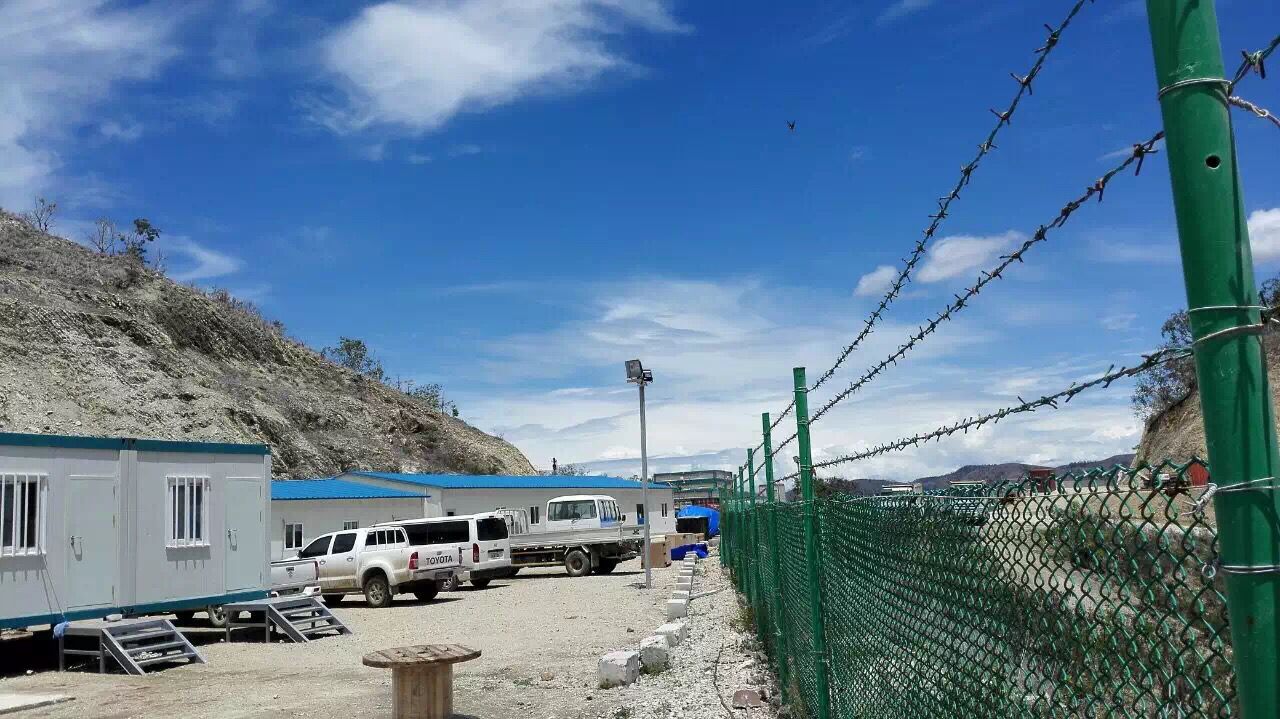
Container homes are not magically immune to fire, but when they’re engineered with the right materials, insulation, and safety systems, they can achieve an impressively high level of fire resistance—often outperforming traditional wood-framed houses. Whether you are building a residential unit or a large engineering camp, the true answer depends on how the container home is designed, manufactured, and installed.
In this in-depth guide, you’ll learn what “fireproof” really means for container homes, how reputable manufacturers like CDPH (Chengdong Prefabricated Housing) design fire-resistant container houses, and what you should look for when evaluating fire safety in your own project.
What “fireproof” really means
No modern building—container home or otherwise—is absolutely fireproof in every imaginable scenario. Instead, professional standards talk about fire resistance: how long a structure or building component can withstand fire exposure while preserving integrity and limiting flame spread.
Container houses from manufacturers like CDPH are designed to achieve specific fire resistance performance for walls, roofs, and floors based on laboratory tests and international standards. This approach focuses on controlling a fire, slowing its spread, and protecting occupants long enough to escape safely and minimize property damage.
Steel container shells and inherent fire resistance
The starting point for any container home is the shipping container itself, typically made from Corten weathering steel. This steel has a melting point of around 1,500°C (2,732°F), which is far higher than the temperatures seen in most building fires. As a result, the steel frame and shell of a container home do not ignite and provide a robust, non-combustible structural backbone.
Compared with combustible wood frames, a steel container shell can help limit flame spread and structural collapse, especially in the early stages of a fire. However, the shell alone does not determine the fire performance of the finished house—interior linings, insulation, and finishes are equally important.
Why insulation choice is critical for fire safety
Many people are surprised to learn that insulation is one of the most important factors in determining whether a container home is truly fire-resistant. Some common insulations, such as basic EPS (expanded polystyrene) or untreated foam, can ignite, melt, and release toxic smoke when exposed to fire.
By contrast, fire-rated materials like rock wool (mineral wool), certain glass wool products, and polyurethane (PU) with fire-retardant additives are far more suitable for fire-conscious container house design. These materials are either non-combustible or formulated to significantly slow flame spread and smoke development.
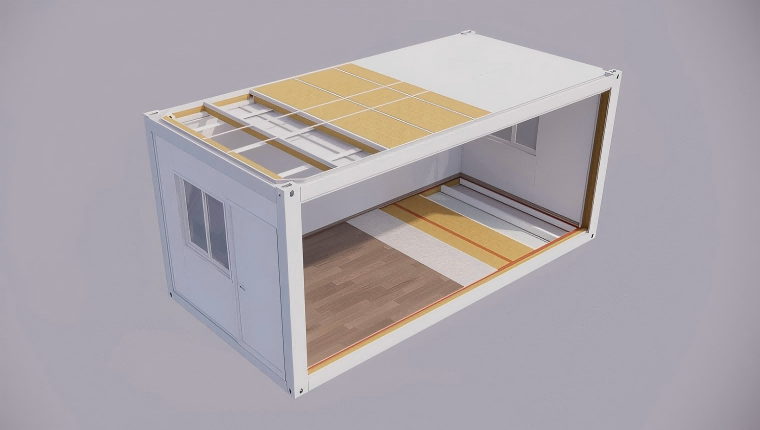
CDPH, for example, uses high-performance rock wool composite wall panels in many of its container house systems specifically because of rock wool’s excellent fire resistance and stable performance under high temperatures. In addition to fire protection, rock wool also improves thermal insulation and sound reduction, which is especially valuable in engineering camps and high-occupancy projects.
Tested fire resistance: walls, roofs, and floors
To move beyond theory, serious manufacturers submit their container house systems to formal fire tests carried out by accredited labs. According to CDPH, their rock wool composite panels in 75 mm and 100 mm thickness have passed 2-hour fire resistance tests performed by Intertek, a globally recognized testing organization. That means these wall assemblies can maintain their structural and shielding function for at least two hours under standardized fire conditions—far beyond what many conventional wall systems achieve.
In the same test programs, CDPH reports that their floor and roof systems constructed with matching fire-resistant assemblies have also passed extended fire endurance tests, providing a coherent protection envelope around the occupants. This kind of system-level testing is critical because real fires attack multiple surfaces simultaneously, not just isolated components.
When you review fire performance claims, always look for:
The tested duration (e.g., 60 minutes, 90 minutes, 120 minutes).
The test lab (such as Intertek or other accredited bodies).
The assembly details (including insulation material and thickness).
CDPH’s published data ties specific panel thicknesses and build-ups to documented test reports, giving project owners a clear line of sight from marketing claims to laboratory results.
International certifications and code compliance
Beyond individual test reports, container homes used in demanding markets need to comply with international and regional building regulations. CDPH highlights that its container houses and prefab products carry CE certification for relevant European standards, demonstrating compliance with structural, safety, and often fire-related criteria.
For large engineering projects, governments and clients also rely on Certificates of Conformity (COC) and other approval documents to confirm that the modular units meet local fire safety and electrical standards. These frameworks ensure that container homes are evaluated not only as steel boxes, but as complete buildings—including exits, electrical systems, finishing materials, and emergency provisions.
For buyers, this means you should always ask a supplier:
Which codes or standards their container houses comply with in your target country or region.
Whether there are third-party certificates (e.g., CE, COC) covering fire performance and safety systems.
Electrical systems: the hidden fire risk
In most real-world fires, ignition often comes from electrical faults, overloaded circuits, or unsafe appliances—regardless of the building type. Container homes are no exception, so the design and installation quality of electrical systems matter just as much as wall materials.
One advantage of industrially produced container houses from companies like CDPH is that electrical wiring, distribution boxes, and fixtures are prefabricated and tested under factory conditions instead of improvised on site. This controlled production allows consistent use of:
Fire-retardant cables and conduits.
Properly sized circuit breakers and residual current devices.
Standardized protective measures for sockets, lights, and HVAC units.
Factory quality control minimizes the chance of loose connections or undersized conductors—common root causes of electrical fires in conventional site-built projects.
Interior finishes and partition design
Even with a steel shell and fire-resistant insulation, interior finishes can make or break the overall fire profile of a container home. Many modern designs use:
Cement fiber boards or fire-rated gypsum boards for interior lining, which are inherently non-combustible and stable under heat.
Metal studs and light steel framing that avoid combustible timber structures wherever possible.
In high-risk zones such as kitchens, server rooms, or workshops, CDPH and similar manufacturers commonly reinforce walls and ceilings with extra fire-rated boards, mineral wool, and detailing that keeps flames from quickly breaching into adjacent rooms. This compartmentalization strategy buys critical time for occupants to escape and for first responders to intervene.
Comparing container homes with traditional houses
From a fire safety perspective, container homes compare very favorably with most conventional wood-frame buildings and can approach the performance of more massive concrete structures when properly engineered.
Key differences include:
In wildfire-prone or industrial environments, a well-designed steel container house with mineral wool insulation and non-combustible cladding can be significantly more robust against external fire exposure than a typical timber house.
Fire safety in different use cases
Container houses are used in many settings—each with specific fire safety demands.
Engineering and construction camps
In large-scale engineering camps, container units serve as dormitories, offices, canteens, clinics, and control rooms. These high-occupancy spaces demand strict control of escape routes, smoke detection, and fire separation between buildings.
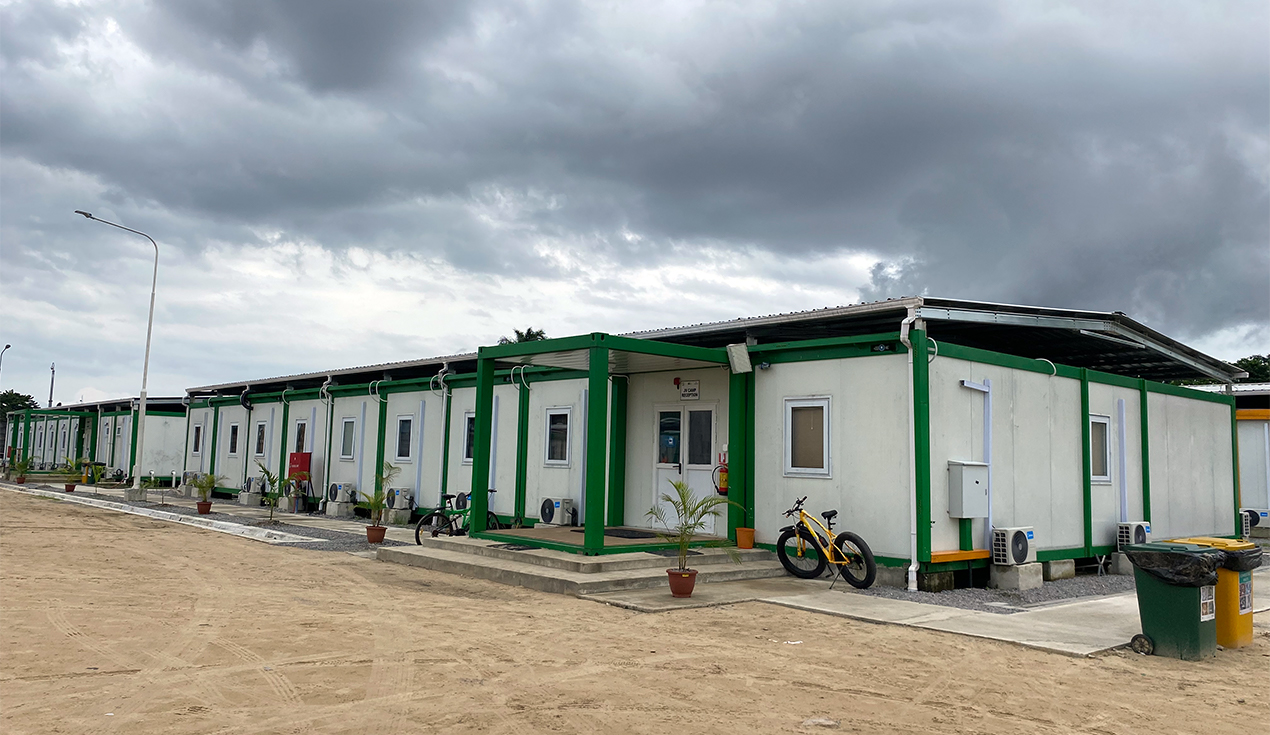
Manufacturers like CDPH design standardized modules that can be combined into multi-story complexes while preserving continuous fire-resistant walls, corridor layouts, and emergency exits in line with local regulations. Using rock wool panels, fire-rated doors, and pre-engineered stair cores, these camps achieve a level of safety that would be complex to replicate with ad-hoc site-built structures under tight timeframes.
Remote mining, oil & gas, and industrial sites
In oil, gas, and mining environments, container houses often sit near flammable materials, heavy equipment, and high-energy processes. Here, the non-combustible steel shell and fire-rated panel systems play a crucial role in shielding occupants from external fire or explosion hazards.
CDPH emphasizes that its container solutions for such projects integrate robust fire-resistant envelopes with durable, corrosion-protected steel suitable for harsh climates and long-term use.
Emergency and temporary housing
For post-disaster shelters and emergency camps, container homes must balance speed of deployment with reliable safety. Pre-assembled, CE-certified units with built-in fire-resistant construction allow agencies and contractors to set up safe, code-compliant accommodation quickly, without sacrificing fire performance.
How CDPH designs fire-resistant container homes
CDPH (Chengdong Prefabricated Housing) is a long-established specialist in modular and container houses for global engineering projects, and its product line illustrates what “fire-resistant container home” means in practice.
Key fire-related design features include:
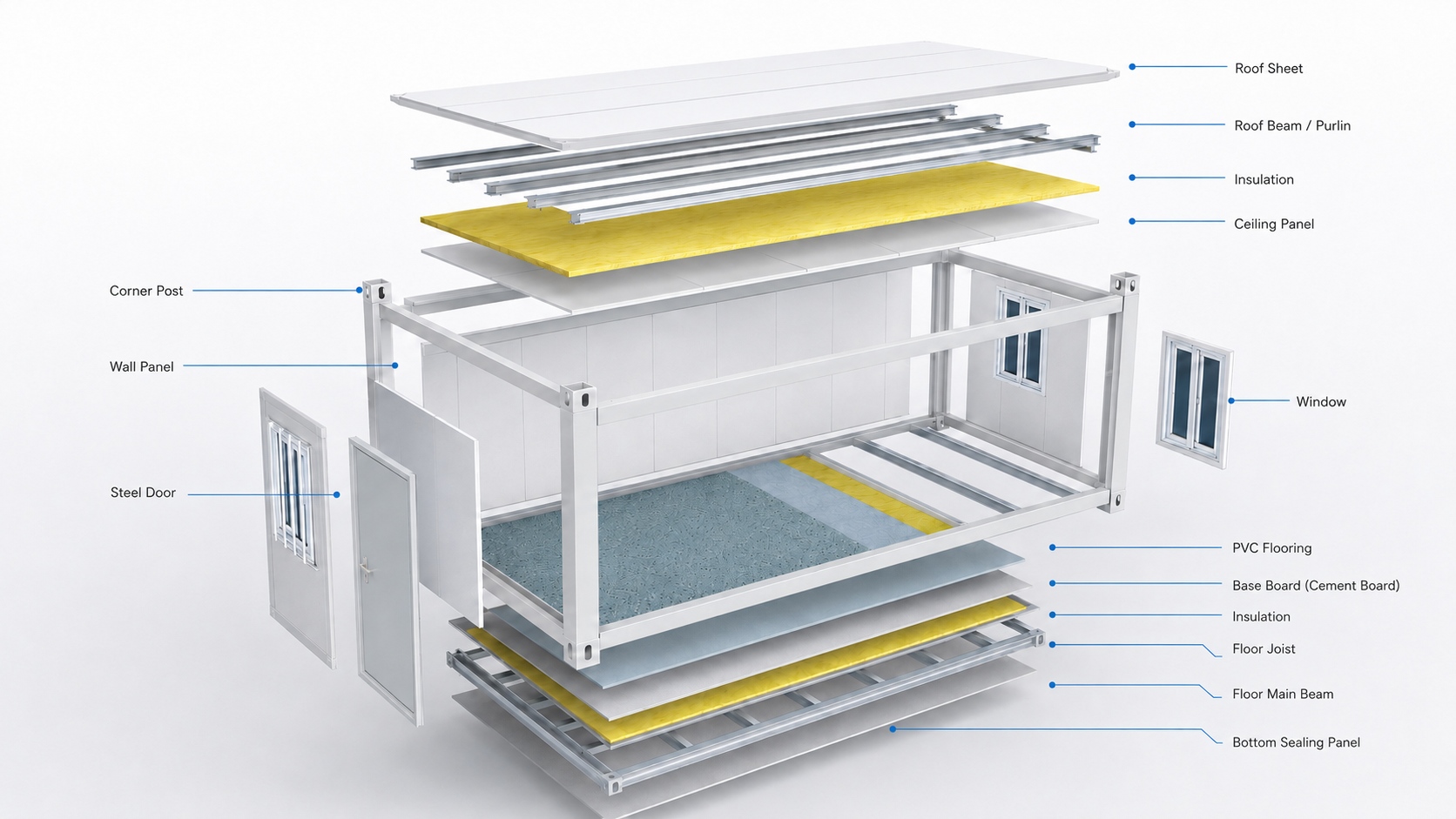
Rock wool sandwich panels as standard or optional wall and roof insulation for high fire resistance and thermal stability.
2-hour fire-rated wall assemblies, verified through Intertek laboratory tests in specified panel thicknesses.
CE-certified structural systems and international certifications that cover steel structures and safety performance for demanding markets.
Factory-assembled modules with pre-installed electrical, plumbing, and finishes, allowing consistent quality and easier compliance with fire codes.
To explore specific container house models, materials, and system options, you can review CDPH’s container house product center on the official website:https://www.cdph.net/product-center/container-house
For more technical insights into materials and insulation options, their detailed container house materials and insulation guides are also available:https://www.cdph.net/blog/container-house-materials-the-complete-guide-to-building-your-dream-modular-homehttps://www.cdph.net/blog/complete-guide-to-container-house-insulation
Practical fire safety tips when choosing a container home
If you are evaluating container homes and fire safety is a priority, use the following checklist when talking to suppliers or designing your project:
Ask about fire tests and ratings
Request official test reports for wall, roof, and floor assemblies (e.g., 60–120 minutes fire resistance).
Confirm which lab performed the tests and how closely the tested assembly matches the product you are buying.
Prioritize fire-resistant insulation
Choose mineral wool / rock wool or other non-combustible or fire-rated insulations for walls, roofs, and floors.
Avoid relying solely on basic EPS or non-rated foam in high-risk zones.
Verify certifications and code compliance
Check for CE certifications, COC documents, or other approvals relevant to your region.
Ensure the supplier can support you with documentation for local permit applications.
Review electrical and mechanical design
Confirm that wiring, panels, and protection devices are designed to meet national standards.
Ask whether electrical systems are pre-tested at the factory and what quality controls are in place.
Plan safe layouts and escape routes
For multi-unit camps, verify that corridors, staircases, and exit doors meet egress requirements.
Include smoke detectors, alarm systems, emergency lighting, and clearly marked evacuation routes.
Consider additional protective measures
In wildfire or high-risk industrial areas, discuss options like intumescent fireproof coatings, non-combustible exterior cladding, and defensible space around buildings.
Common myths about fire and container homes
Because container homes are still relatively new to many buyers, several myths circulate about fire safety:
Myth 1: “All container homes are automatically fireproof.”
Reality: The steel shell is non-combustible, but interior materials vary widely. Only designs using proper fire-rated insulation, finishes, and tested assemblies can be considered highly fire-resistant.
Myth 2: “Container homes are dangerous ovens in a fire.”
Reality: Steel does conduct heat, but when combined with mineral wool insulation, fire-rated linings, and ventilated details, container houses can effectively delay heat transfer and protect occupants.
Myth 3: “Fire safety is only about the walls.”
Reality: Electrical systems, escape routes, doors and windows, and on-site practices (like safe cooking and equipment use) are equally important for overall fire safety.
Understanding these nuances helps you move beyond marketing slogans and focus on measurable, certified performance.
Are container homes fireproof? A practical conclusion
So, are container homes fireproof? In the strictest sense, no building is absolutely fireproof—but well-designed container homes are inherently more fire-resistant than many traditional housing types and can be engineered to meet very demanding fire safety standards.
With a non-combustible steel shell, rock wool or other fire-rated insulation, certified fire-tested wall and roof systems, and properly engineered electrical and safety layouts, container houses from experienced manufacturers like CDPH offer a robust, reliable fire safety profile for engineering camps, remote sites, and residential or commercial applications.
To dive deeper into the technical details and see CDPH’s full explanation, you can read their dedicated article on the topic:https://www.cdph.net/blog/are-container-houses-fireproof
When you combine these engineered features with sensible on-site fire precautions, container homes are not just an efficient and flexible building solution—they become a highly secure option for protecting people, assets, and operations in some of the world’s most challenging environments.
Are Container Homes Fireproof? Comprehensive Guide to Fire Safety in Shipping Container Houses "}}}}},"R1VNdEd9foQBwtx054ccWuRXnag":{"id":"R1VNdEd9foQBwtx054ccWuRXnag","snapshot":{"parent_id":"H5BndNmsoohfpXx3G7YcJlr9nJb","comments":[],"locked":false,"align":"","type":"text","revisions":[],"hidden":false,"author":"7570895337385410588","children":[],"text":{"apool":{"nextNum":1,"numToAttrib":{"0":["author","7519687792448929820"]}},"initialAttributedTexts":{"attribs":{"0":"*0+7d"},"text":{"0":""}}},"folded":false}},"OKjrd65oWogurwx97rfcys6unvf":{"id":"OKjrd65oWogurwx97rfcys6unvf","snapshot":{"children":[],"align":"","folded":false,"type":"text","parent_id":"H5BndNmsoohfpXx3G7YcJlr9nJb","locked":false,"hidden":false,"author":"7570895337385410588","comments":[],"revisions":[],"text":{"apool":{"nextNum":1,"numToAttrib":{"0":["author","7570895337385410588"]}},"initialAttributedTexts":{"attribs":{"0":"*0+u"},"text":{"0":"Are Container Homes Fireproof?"}}}}},"GtY0dvtzcoqtMGxuvs8cjjsCnkb":{"id":"GtY0dvtzcoqtMGxuvs8cjjsCnkb","snapshot":{"hidden":false,"author":"7519687792448929820","align":"","type":"text","comments":[],"revisions":[],"locked":false,"parent_id":"H5BndNmsoohfpXx3G7YcJlr9nJb","children":[],"text":{"initialAttributedTexts":{"attribs":{"0":""},"text":{"0":""}},"apool":{"nextNum":0,"numToAttrib":{}}},"folded":false}},"SHFtdGy4Ko6AV6xxcBdcrFhNnRU":{"id":"SHFtdGy4Ko6AV6xxcBdcrFhNnRU","snapshot":{"author":"7519687792448929820","text":{"apool":{"numToAttrib":{},"nextNum":0},"initialAttributedTexts":{"attribs":{"0":""},"text":{"0":""}}},"align":"","parent_id":"H5BndNmsoohfpXx3G7YcJlr9nJb","comments":[],"locked":false,"hidden":false,"children":[],"folded":false,"type":"text","revisions":[]}},"ZHxtdIY3toETClxjO5Gcm9Onnse":{"id":"ZHxtdIY3toETClxjO5Gcm9Onnse","snapshot":{"locked":false,"hidden":false,"children":[],"text":{"apool":{"nextNum":1,"numToAttrib":{"0":["author","7519687792448929820"]}},"initialAttributedTexts":{"attribs":{"0":"*0+bj"},"text":{"0":"Container homes are not magically immune to fire, but when they’re engineered with the right materials, insulation, and safety systems, they can achieve an impressively high level of fire resistance—often outperforming traditional wood-framed houses. Whether you are building a residential unit or a large engineering camp, the true answer depends on how the container home is designed, manufactured, and installed."}}},"align":"","folded":false,"parent_id":"H5BndNmsoohfpXx3G7YcJlr9nJb","comments":[],"author":"7519687792448929820","type":"text","revisions":[]}},"Pu6Pdhg1OoJPHyxd3l6caYDxnWf":{"id":"Pu6Pdhg1OoJPHyxd3l6caYDxnWf","snapshot":{"text":{"initialAttributedTexts":{"attribs":{"0":"*0+7p"},"text":{"0":"In this in-depth guide, you’ll learn what “fireproof” really means for container homes, how reputable manufacturers like CDPH (Chengdong Prefabricated Housing) design fire-resistant container houses, and what you should look for when evaluating fire safety in your own project."}},"apool":{"numToAttrib":{"0":["author","7519687792448929820"]},"nextNum":1}},"folded":false,"comments":[],"revisions":[],"author":"7519687792448929820","children":[],"align":"","type":"text","parent_id":"H5BndNmsoohfpXx3G7YcJlr9nJb","locked":false,"hidden":false}},"VXsJdXB6yo4VjYxrO8DcbaIUnjf":{"id":"VXsJdXB6yo4VjYxrO8DcbaIUnjf","snapshot":{"comments":[],"revisions":[],"locked":false,"author":"7519687792448929820","children":[],"text":{"initialAttributedTexts":{"attribs":{"0":"*0+t"},"text":{"0":"What “fireproof” really means"}},"apool":{"nextNum":1,"numToAttrib":{"0":["author","7519687792448929820"]}}},"folded":false,"type":"heading2","hidden":false,"align":"","parent_id":"H5BndNmsoohfpXx3G7YcJlr9nJb"}},"GlCqdqu1tooFWbxETo6ciAnLnLI":{"id":"GlCqdqu1tooFWbxETo6ciAnLnLI","snapshot":{"comments":[],"locked":false,"hidden":false,"author":"7519687792448929820","children":[],"align":"","folded":false,"parent_id":"H5BndNmsoohfpXx3G7YcJlr9nJb","revisions":[],"text":{"apool":{"nextNum":1,"numToAttrib":{"0":["author","7519687792448929820"]}},"initialAttributedTexts":{"attribs":{"0":"*0+7x"},"text":{"0":"No modern building—container home or otherwise—is absolutely fireproof in every imaginable scenario. Instead, professional standards talk about fire resistance: how long a structure or building component can withstand fire exposure while preserving integrity and limiting flame spread."}}},"type":"text"}},"CQL0dIu69o4e0Fx0wCxcfRbInpb":{"id":"CQL0dIu69o4e0Fx0wCxcfRbInpb","snapshot":{"comments":[],"revisions":[],"author":"7519687792448929820","children":[],"text":{"apool":{"numToAttrib":{"0":["author","7519687792448929820"]},"nextNum":1},"initialAttributedTexts":{"attribs":{"0":"*0+9f"},"text":{"0":"Container houses from manufacturers like CDPH are designed to achieve specific fire resistance performance for walls, roofs, and floors based on laboratory tests and international standards. This approach focuses on controlling a fire, slowing its spread, and protecting occupants long enough to escape safely and minimize property damage."}}},"folded":false,"type":"text","parent_id":"H5BndNmsoohfpXx3G7YcJlr9nJb","locked":false,"hidden":false,"align":""}},"GENgds7rmol3P1xrDtfcfZo4nrf":{"id":"GENgds7rmol3P1xrDtfcfZo4nrf","snapshot":{"revisions":[],"hidden":false,"children":[],"text":{"apool":{"nextNum":1,"numToAttrib":{"0":["author","7519687792448929820"]}},"initialAttributedTexts":{"attribs":{"0":"*0+1f"},"text":{"0":"Steel container shells and inherent fire resistance"}}},"align":"","type":"heading2","comments":[],"locked":false,"author":"7519687792448929820","folded":false,"parent_id":"H5BndNmsoohfpXx3G7YcJlr9nJb"}},"PC3JdbRDkoO2TmxCv0fcojyFnyb":{"id":"PC3JdbRDkoO2TmxCv0fcojyFnyb","snapshot":{"type":"text","parent_id":"H5BndNmsoohfpXx3G7YcJlr9nJb","locked":false,"hidden":false,"folded":false,"comments":[],"revisions":[],"author":"7519687792448929820","children":[],"text":{"apool":{"nextNum":1,"numToAttrib":{"0":["author","7519687792448929820"]}},"initialAttributedTexts":{"attribs":{"0":"*0+an"},"text":{"0":"The starting point for any container home is the shipping container itself, typically made from Corten weathering steel. This steel has a melting point of around 1,500°C (2,732°F), which is far higher than the temperatures seen in most building fires. As a result, the steel frame and shell of a container home do not ignite and provide a robust, non-combustible structural backbone."}}},"align":""}},"NqWjdvXCCo7L4RxnP1YcvEeLnse":{"id":"NqWjdvXCCo7L4RxnP1YcvEeLnse","snapshot":{"comments":[],"hidden":false,"author":"7519687792448929820","folded":false,"parent_id":"H5BndNmsoohfpXx3G7YcJlr9nJb","revisions":[],"locked":false,"children":[],"text":{"apool":{"nextNum":1,"numToAttrib":{"0":["author","7519687792448929820"]}},"initialAttributedTexts":{"attribs":{"0":"*0+8m"},"text":{"0":"Compared with combustible wood frames, a steel container shell can help limit flame spread and structural collapse, especially in the early stages of a fire. However, the shell alone does not determine the fire performance of the finished house—interior linings, insulation, and finishes are equally important."}}},"align":"","type":"text"}},"AJERddYLjoaN1yxcRgVcTuAxne8":{"id":"AJERddYLjoaN1yxcRgVcTuAxne8","snapshot":{"folded":false,"type":"heading3","parent_id":"H5BndNmsoohfpXx3G7YcJlr9nJb","locked":false,"author":"7519687792448929820","text":{"apool":{"nextNum":1,"numToAttrib":{"0":["author","7519687792448929820"]}},"initialAttributedTexts":{"attribs":{"0":"*0+1d"},"text":{"0":"Why insulation choice is critical for fire safety"}}},"align":"","comments":[],"revisions":[],"hidden":false,"children":[]}},"F1y9drMhxoASTuxFNjecP6uFnpb":{"id":"F1y9drMhxoASTuxFNjecP6uFnpb","snapshot":{"locked":false,"author":"7519687792448929820","children":[],"align":"","folded":false,"type":"text","parent_id":"H5BndNmsoohfpXx3G7YcJlr9nJb","comments":[],"revisions":[],"hidden":false,"text":{"apool":{"nextNum":1,"numToAttrib":{"0":["author","7519687792448929820"]}},"initialAttributedTexts":{"attribs":{"0":"*0+8d"},"text":{"0":"Many people are surprised to learn that insulation is one of the most important factors in determining whether a container home is truly fire-resistant. Some common insulations, such as basic EPS (expanded polystyrene) or untreated foam, can ignite, melt, and release toxic smoke when exposed to fire."}}}}},"EJD3dG591oZcqRxLCVqccnEznbc":{"id":"EJD3dG591oZcqRxLCVqccnEznbc","snapshot":{"folded":false,"type":"text","comments":[],"locked":false,"hidden":false,"author":"7519687792448929820","children":[],"parent_id":"H5BndNmsoohfpXx3G7YcJlr9nJb","revisions":[],"text":{"apool":{"nextNum":1,"numToAttrib":{"0":["author","7519687792448929820"]}},"initialAttributedTexts":{"attribs":{"0":"*0+91"},"text":{"0":"By contrast, fire-rated materials like rock wool (mineral wool), certain glass wool products, and polyurethane (PU) with fire-retardant additives are far more suitable for fire-conscious container house design. These materials are either non-combustible or formulated to significantly slow flame spread and smoke development."}}},"align":""}},"Vd2kdjLyfoTHwrxqPQNcs1xWn5f":{"id":"Vd2kdjLyfoTHwrxqPQNcs1xWn5f","snapshot":{"children":[],"folded":false,"type":"text","parent_id":"H5BndNmsoohfpXx3G7YcJlr9nJb","comments":[],"revisions":[],"locked":false,"hidden":false,"author":"7519687792448929820","text":{"apool":{"nextNum":1,"numToAttrib":{"0":["author","7519687792448929820"]}},"initialAttributedTexts":{"attribs":{"0":"*0+b0"},"text":{"0":"CDPH, for example, uses high-performance rock wool composite wall panels in many of its container house systems specifically because of rock wool’s excellent fire resistance and stable performance under high temperatures. In addition to fire protection, rock wool also improves thermal insulation and sound reduction, which is especially valuable in engineering camps and high-occupancy projects."}}},"align":""}},"R59ZdVm3BoeNGlx0sSFc9cWFnXb":{"id":"R59ZdVm3BoeNGlx0sSFc9cWFnXb","snapshot":{"hidden":false,"type":"heading3","revisions":[],"locked":false,"author":"7519687792448929820","children":[],"text":{"initialAttributedTexts":{"attribs":{"0":"*0+1c"},"text":{"0":"Tested fire resistance: walls, roofs, and floors"}},"apool":{"nextNum":1,"numToAttrib":{"0":["author","7519687792448929820"]}}},"align":"","folded":false,"parent_id":"H5BndNmsoohfpXx3G7YcJlr9nJb","comments":[]}},"VAfrd5vJooVMajxt211c0s0snmc":{"id":"VAfrd5vJooVMajxt211c0s0snmc","snapshot":{"locked":false,"hidden":false,"author":"7519687792448929820","children":[],"text":{"apool":{"nextNum":1,"numToAttrib":{"0":["author","7519687792448929820"]}},"initialAttributedTexts":{"attribs":{"0":"*0+ek"},"text":{"0":"To move beyond theory, serious manufacturers submit their container house systems to formal fire tests carried out by accredited labs. According to CDPH, their rock wool composite panels in 75 mm and 100 mm thickness have passed 2-hour fire resistance tests performed by Intertek, a globally recognized testing organization. That means these wall assemblies can maintain their structural and shielding function for at least two hours under standardized fire conditions—far beyond what many conventional wall systems achieve."}}},"type":"text","comments":[],"revisions":[],"align":"","folded":false,"parent_id":"H5BndNmsoohfpXx3G7YcJlr9nJb"}},"KeNxdAB9mo1ShFxPOxgcZ8HcnM8":{"id":"KeNxdAB9mo1ShFxPOxgcZ8HcnM8","snapshot":{"comments":[],"author":"7519687792448929820","align":"","type":"text","parent_id":"H5BndNmsoohfpXx3G7YcJlr9nJb","revisions":[],"locked":false,"hidden":false,"children":[],"text":{"apool":{"nextNum":1,"numToAttrib":{"0":["author","7519687792448929820"]}},"initialAttributedTexts":{"attribs":{"0":"*0+ac"},"text":{"0":"In the same test programs, CDPH reports that their floor and roof systems constructed with matching fire-resistant assemblies have also passed extended fire endurance tests, providing a coherent protection envelope around the occupants. This kind of system-level testing is critical because real fires attack multiple surfaces simultaneously, not just isolated components."}}},"folded":false}},"AgPtdWmZOo1xYEx7xDccbQkdnah":{"id":"AgPtdWmZOo1xYEx7xDccbQkdnah","snapshot":{"type":"text","comments":[],"locked":false,"hidden":false,"children":[],"text":{"apool":{"nextNum":1,"numToAttrib":{"0":["author","7519687792448929820"]}},"initialAttributedTexts":{"attribs":{"0":"*0+1l"},"text":{"0":"When you review fire performance claims, always look for:"}}},"folded":false,"parent_id":"H5BndNmsoohfpXx3G7YcJlr9nJb","revisions":[],"author":"7519687792448929820","align":""}},"KsYJdnNo1oA8y7xjc6tcuNCHnkc":{"id":"KsYJdnNo1oA8y7xjc6tcuNCHnkc","snapshot":{"author":"7519687792448929820","children":[],"text":{"apool":{"nextNum":1,"numToAttrib":{"0":["author","7519687792448929820"]}},"initialAttributedTexts":{"attribs":{"0":"*0+1s"},"text":{"0":"The tested duration (e.g., 60 minutes, 90 minutes, 120 minutes)."}}},"folded":false,"parent_id":"H5BndNmsoohfpXx3G7YcJlr9nJb","comments":[],"locked":false,"hidden":false,"type":"bullet","revisions":[],"align":""}},"T57Odyc6Eog7rPxkTVVc4BdWnSz":{"id":"T57Odyc6Eog7rPxkTVVc4BdWnSz","snapshot":{"locked":false,"author":"7519687792448929820","type":"bullet","parent_id":"H5BndNmsoohfpXx3G7YcJlr9nJb","revisions":[],"text":{"apool":{"nextNum":1,"numToAttrib":{"0":["author","7519687792448929820"]}},"initialAttributedTexts":{"attribs":{"0":"*0+1n"},"text":{"0":"The test lab (such as Intertek or other accredited bodies)."}}},"align":"","folded":false,"comments":[],"hidden":false,"children":[]}},"QlW5dKGBeoVMMxxxUT0cKEiunbf":{"id":"QlW5dKGBeoVMMxxxUT0cKEiunbf","snapshot":{"children":[],"text":{"apool":{"numToAttrib":{"0":["author","7519687792448929820"]},"nextNum":1},"initialAttributedTexts":{"attribs":{"0":"*0+1v"},"text":{"0":"The assembly details (including insulation material and thickness)."}}},"author":"7519687792448929820","parent_id":"H5BndNmsoohfpXx3G7YcJlr9nJb","comments":[],"revisions":[],"locked":false,"hidden":false,"align":"","folded":false,"type":"bullet"}},"P2YWd9qYQo59YfxSCOccGrNlnvc":{"id":"P2YWd9qYQo59YfxSCOccGrNlnvc","snapshot":{"hidden":false,"align":"","folded":false,"type":"text","revisions":[],"locked":false,"children":[],"text":{"apool":{"nextNum":1,"numToAttrib":{"0":["author","7519687792448929820"]}},"initialAttributedTexts":{"attribs":{"0":"*0+54"},"text":{"0":"CDPH’s published data ties specific panel thicknesses and build-ups to documented test reports, giving project owners a clear line of sight from marketing claims to laboratory results."}}},"parent_id":"H5BndNmsoohfpXx3G7YcJlr9nJb","comments":[],"author":"7519687792448929820"}},"Rp8pdHuZqoCULXxzF92cZljCnCf":{"id":"Rp8pdHuZqoCULXxzF92cZljCnCf","snapshot":{"type":"heading3","parent_id":"H5BndNmsoohfpXx3G7YcJlr9nJb","hidden":false,"text":{"apool":{"nextNum":1,"numToAttrib":{"0":["author","7519687792448929820"]}},"initialAttributedTexts":{"attribs":{"0":"*0+1c"},"text":{"0":"International certifications and code compliance"}}},"align":"","comments":[],"revisions":[],"locked":false,"author":"7519687792448929820","children":[],"folded":false}},"CuLkdaWM1oMYSjxgSbJcwBOtnng":{"id":"CuLkdaWM1oMYSjxgSbJcwBOtnng","snapshot":{"revisions":[],"author":"7519687792448929820","children":[],"align":"","folded":false,"type":"text","parent_id":"H5BndNmsoohfpXx3G7YcJlr9nJb","comments":[],"locked":false,"hidden":false,"text":{"apool":{"nextNum":1,"numToAttrib":{"0":["author","7519687792448929820"]}},"initialAttributedTexts":{"attribs":{"0":"*0+9j"},"text":{"0":"Beyond individual test reports, container homes used in demanding markets need to comply with international and regional building regulations. CDPH highlights that its container houses and prefab products carry CE certification for relevant European standards, demonstrating compliance with structural, safety, and often fire-related criteria."}}}}},"QrDEdwkCYocryjxh2TicnWdXnJe":{"id":"QrDEdwkCYocryjxh2TicnWdXnJe","snapshot":{"parent_id":"H5BndNmsoohfpXx3G7YcJlr9nJb","locked":false,"hidden":false,"text":{"apool":{"nextNum":1,"numToAttrib":{"0":["author","7519687792448929820"]}},"initialAttributedTexts":{"text":{"0":"For large engineering projects, governments and clients also rely on Certificates of Conformity (COC) and other approval documents to confirm that the modular units meet local fire safety and electrical standards. These frameworks ensure that container homes are evaluated not only as steel boxes, but as complete buildings—including exits, electrical systems, finishing materials, and emergency provisions."},"attribs":{"0":"*0+bb"}}},"align":"","type":"text","comments":[],"revisions":[],"author":"7519687792448929820","children":[],"folded":false}},"VnlOdSBkGoifEJx89LYcbttpnxe":{"id":"VnlOdSBkGoifEJx89LYcbttpnxe","snapshot":{"revisions":[],"locked":false,"author":"7519687792448929820","text":{"apool":{"nextNum":1,"numToAttrib":{"0":["author","7519687792448929820"]}},"initialAttributedTexts":{"attribs":{"0":"*0+1k"},"text":{"0":"For buyers, this means you should always ask a supplier:"}}},"align":"","parent_id":"H5BndNmsoohfpXx3G7YcJlr9nJb","comments":[],"children":[],"folded":false,"type":"text","hidden":false}},"LSBgdrCfDo7mvTxWk4ZcR1Ventf":{"id":"LSBgdrCfDo7mvTxWk4ZcR1Ventf","snapshot":{"parent_id":"H5BndNmsoohfpXx3G7YcJlr9nJb","revisions":[],"locked":false,"author":"7519687792448929820","text":{"apool":{"nextNum":1,"numToAttrib":{"0":["author","7519687792448929820"]}},"initialAttributedTexts":{"text":{"0":"Which codes or standards their container houses comply with in your target country or region."},"attribs":{"0":"*0+2l"}}},"type":"bullet","comments":[],"hidden":false,"children":[],"align":"","folded":false}},"EUWGdXXHEoMLg9xFxPWcoYS5nLt":{"id":"EUWGdXXHEoMLg9xFxPWcoYS5nLt","snapshot":{"align":"","type":"bullet","parent_id":"H5BndNmsoohfpXx3G7YcJlr9nJb","locked":false,"hidden":false,"text":{"apool":{"nextNum":1,"numToAttrib":{"0":["author","7519687792448929820"]}},"initialAttributedTexts":{"attribs":{"0":"*0+2w"},"text":{"0":"Whether there are third-party certificates (e.g., CE, COC) covering fire performance and safety systems."}}},"folded":false,"comments":[],"revisions":[],"author":"7519687792448929820","children":[]}},"WG1xdoCMFo2pThxutn4c4xrin9b":{"id":"WG1xdoCMFo2pThxutn4c4xrin9b","snapshot":{"revisions":[],"hidden":false,"children":[],"text":{"apool":{"nextNum":1,"numToAttrib":{"0":["author","7519687792448929820"]}},"initialAttributedTexts":{"attribs":{"0":"*0+14"},"text":{"0":"Electrical systems: the hidden fire risk"}}},"align":"","folded":false,"type":"heading3","parent_id":"H5BndNmsoohfpXx3G7YcJlr9nJb","comments":[],"locked":false,"author":"7519687792448929820"}},"Mz5BdP6L7o82lnxDsibcqBOnnYe":{"id":"Mz5BdP6L7o82lnxDsibcqBOnnYe","snapshot":{"hidden":false,"children":[],"text":{"apool":{"numToAttrib":{"0":["author","7519687792448929820"]},"nextNum":1},"initialAttributedTexts":{"attribs":{"0":"*0+7r"},"text":{"0":"In most real-world fires, ignition often comes from electrical faults, overloaded circuits, or unsafe appliances—regardless of the building type. Container homes are no exception, so the design and installation quality of electrical systems matter just as much as wall materials."}}},"folded":false,"type":"text","parent_id":"H5BndNmsoohfpXx3G7YcJlr9nJb","comments":[],"revisions":[],"locked":false,"author":"7519687792448929820","align":""}},"IXWGdP13doNXkoxv4ngc0LsPnlb":{"id":"IXWGdP13doNXkoxv4ngc0LsPnlb","snapshot":{"type":"text","revisions":[],"locked":false,"hidden":false,"text":{"apool":{"nextNum":1,"numToAttrib":{"0":["author","7519687792448929820"]}},"initialAttributedTexts":{"attribs":{"0":"*0+7q"},"text":{"0":"One advantage of industrially produced container houses from companies like CDPH is that electrical wiring, distribution boxes, and fixtures are prefabricated and tested under factory conditions instead of improvised on site. This controlled production allows consistent use of:"}}},"folded":false,"parent_id":"H5BndNmsoohfpXx3G7YcJlr9nJb","comments":[],"author":"7519687792448929820","children":[],"align":""}},"VcgEdIAIcoqVbxxMqfjcHtLnnBc":{"id":"VcgEdIAIcoqVbxxMqfjcHtLnnBc","snapshot":{"comments":[],"revisions":[],"locked":false,"hidden":false,"author":"7519687792448929820","align":"","folded":false,"parent_id":"H5BndNmsoohfpXx3G7YcJlr9nJb","children":[],"text":{"apool":{"nextNum":1,"numToAttrib":{"0":["author","7519687792448929820"]}},"initialAttributedTexts":{"attribs":{"0":"*0+z"},"text":{"0":"Fire-retardant cables and conduits."}}},"type":"bullet"}},"NkuWdvxjxoE9jdxydbSc5vU5nDg":{"id":"NkuWdvxjxoE9jdxydbSc5vU5nDg","snapshot":{"text":{"apool":{"nextNum":1,"numToAttrib":{"0":["author","7519687792448929820"]}},"initialAttributedTexts":{"attribs":{"0":"*0+1p"},"text":{"0":"Properly sized circuit breakers and residual current devices."}}},"align":"","folded":false,"type":"bullet","parent_id":"H5BndNmsoohfpXx3G7YcJlr9nJb","comments":[],"locked":false,"hidden":false,"revisions":[],"author":"7519687792448929820","children":[]}},"ZGWJdNzHOo7pgQxGKVOcZiEJn2d":{"id":"ZGWJdNzHOo7pgQxGKVOcZiEJn2d","snapshot":{"parent_id":"H5BndNmsoohfpXx3G7YcJlr9nJb","comments":[],"children":[],"text":{"apool":{"nextNum":1,"numToAttrib":{"0":["author","7519687792448929820"]}},"initialAttributedTexts":{"attribs":{"0":"*0+1x"},"text":{"0":"Standardized protective measures for sockets, lights, and HVAC units."}}},"align":"","folded":false,"type":"bullet","revisions":[],"locked":false,"hidden":false,"author":"7519687792448929820"}},"IFwAdzykyowuSLxcaC7chs4knkg":{"id":"IFwAdzykyowuSLxcaC7chs4knkg","snapshot":{"folded":false,"type":"text","parent_id":"H5BndNmsoohfpXx3G7YcJlr9nJb","comments":[],"revisions":[],"text":{"initialAttributedTexts":{"attribs":{"0":"*0+4m"},"text":{"0":"Factory quality control minimizes the chance of loose connections or undersized conductors—common root causes of electrical fires in conventional site-built projects."}},"apool":{"nextNum":1,"numToAttrib":{"0":["author","7519687792448929820"]}}},"locked":false,"hidden":false,"author":"7519687792448929820","children":[],"align":""}},"YOsbdBHFpoJkkmxvyr4cghGznnb":{"id":"YOsbdBHFpoJkkmxvyr4cghGznnb","snapshot":{"hidden":false,"author":"7519687792448929820","text":{"apool":{"nextNum":1,"numToAttrib":{"0":["author","7519687792448929820"]}},"initialAttributedTexts":{"attribs":{"0":"*0+12"},"text":{"0":"Interior finishes and partition design"}}},"type":"heading3","parent_id":"H5BndNmsoohfpXx3G7YcJlr9nJb","comments":[],"revisions":[],"locked":false,"children":[],"align":"","folded":false}},"LqQLdR25Oojt5Ax3LuacDeQTnDb":{"id":"LqQLdR25Oojt5Ax3LuacDeQTnDb","snapshot":{"author":"7519687792448929820","children":[],"text":{"apool":{"nextNum":1,"numToAttrib":{"0":["author","7519687792448929820"]}},"initialAttributedTexts":{"attribs":{"0":"*0+4h"},"text":{"0":"Even with a steel shell and fire-resistant insulation, interior finishes can make or break the overall fire profile of a container home. Many modern designs use:"}}},"folded":false,"revisions":[],"hidden":false,"comments":[],"locked":false,"align":"","type":"text","parent_id":"H5BndNmsoohfpXx3G7YcJlr9nJb"}},"NCXydN8atoAKaaxWIjDc4Rc4nQd":{"id":"NCXydN8atoAKaaxWIjDc4Rc4nQd","snapshot":{"type":"bullet","parent_id":"H5BndNmsoohfpXx3G7YcJlr9nJb","hidden":false,"author":"7519687792448929820","align":"","folded":false,"comments":[],"revisions":[],"locked":false,"children":[],"text":{"apool":{"nextNum":1,"numToAttrib":{"0":["author","7519687792448929820"]}},"initialAttributedTexts":{"attribs":{"0":"*0+3k"},"text":{"0":"Cement fiber boards or fire-rated gypsum boards for interior lining, which are inherently non-combustible and stable under heat."}}}}},"ZAiadUD0rovwUWxXOx5cnZwLnbc":{"id":"ZAiadUD0rovwUWxXOx5cnZwLnbc","snapshot":{"parent_id":"H5BndNmsoohfpXx3G7YcJlr9nJb","comments":[],"children":[],"text":{"initialAttributedTexts":{"attribs":{"0":"*0+2n"},"text":{"0":"Metal studs and light steel framing that avoid combustible timber structures wherever possible."}},"apool":{"nextNum":1,"numToAttrib":{"0":["author","7519687792448929820"]}}},"align":"","type":"bullet","revisions":[],"locked":false,"hidden":false,"author":"7519687792448929820","folded":false}},"FP3JdksW1oNL7zxXhMicvvkFn8b":{"id":"FP3JdksW1oNL7zxXhMicvvkFn8b","snapshot":{"type":"text","comments":[],"revisions":[],"children":[],"text":{"apool":{"nextNum":1,"numToAttrib":{"0":["author","7519687792448929820"]}},"initialAttributedTexts":{"attribs":{"0":"*0+aa"},"text":{"0":"In high-risk zones such as kitchens, server rooms, or workshops, CDPH and similar manufacturers commonly reinforce walls and ceilings with extra fire-rated boards, mineral wool, and detailing that keeps flames from quickly breaching into adjacent rooms. This compartmentalization strategy buys critical time for occupants to escape and for first responders to intervene."}}},"parent_id":"H5BndNmsoohfpXx3G7YcJlr9nJb","locked":false,"hidden":false,"author":"7519687792448929820","align":"","folded":false}},"TUdpdIxzno81oHxRgnQctQ5znSf":{"id":"TUdpdIxzno81oHxRgnQctQ5znSf","snapshot":{"type":"heading3","parent_id":"H5BndNmsoohfpXx3G7YcJlr9nJb","locked":false,"author":"7519687792448929820","text":{"apool":{"nextNum":1,"numToAttrib":{"0":["author","7519687792448929820"]}},"initialAttributedTexts":{"attribs":{"0":"*0+1d"},"text":{"0":"Comparing cont




 More
More














![Top Advantages of Modular Construction Explained [2025]](/uploads/upload/images/20250424/0fb390068474145a09a8c0504c73b1d2.png)
 May 09, 2025